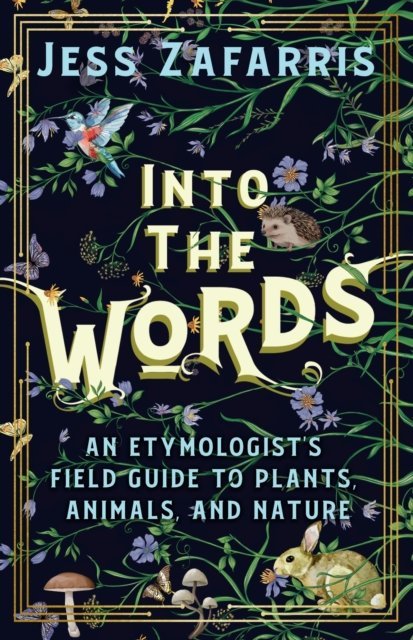
Book Title: Into the Words: An Etymologist's Field Guide to Plants, Animals, and Nature
Author Name: Jess Zafarris
Publish Date: 5th November 2026
Copy source: I received an advance reader copy (ARC) of this book from John Murray Specialist Non-Fiction and NetGalley in exchange for an honest review.
Affiliate Disclosure: This review contains affiliate links. If you purchase a book through one of these links, I may earn a small commission at no additional cost to you.
Genres & Subgenres: Non-fiction | Education | History | Nature | Encyclopaedias & Reference works | Language | Reference
My Rating: 3.5/5 stars
Where to buy: Bookshop.org
Description
“Find out how and why raccoons are named after their hands, squirrels after their tails and olives after their oil. Discover why "dog" is an etymological mystery and "bear" contains a hair-raising horror story.
Which animal holds the record for having the most common names?
When and why did we stop calling giraffes "camel-leopards"?
Do mushrooms have anything to do with mush or rooms?
Why are dandelions named after lions' teeth?
How should you really pluralize "octopus"?
Follow trails word history in the etymological excursion that is Into the Words. This book puts the fun in fungi, leaves language lovers contemplating forest for its trees, and reveals the wonderful stories hiding in our words for birds, beasts, insects, flowers, soil and everything in between.
Featuring both the origins of the names of different organisms, this book will captivate anyone who revels in both the glorious chaos and logic of the English language and the beauty and majesty of everything that lives on the planet Earth.”
My Thoughts
Zafarris shows her enthusiasm for language through a wealth of research, filling the book with a variety of word origins related to flora and fauna. Many of the animals mentioned will be familiar, along with a mix of plenty more unusual fellas too.
There are a lot of interesting facts packed into this book. Certain paragraphs beg to be read aloud, which is especially great when you’re reading a section about a friend’s favourite animal!
I did find myself losing focus and having to re-read sections if I read too much in one go, or late at night. This was particularly the case during the first half of the book, where each word origin tended to be shorter and more rapid-fire. It is quite a dense read, so I would recommend it best enjoyed earlier in the day with more brain focus. I also think the format lends itself well to being a book you can dip into in smaller bursts over a longer period, rather than needing to be read in just a couple of sittings.
My personal highlights of this book were learning the origins of bats “flitter-mouse” and “leather-flapper”, magpies, butterflies “milk-thiefs”, and rabbits. These highlights tended to be the slightly longer sections, which delved a little deeper into the origins, usually a few paragraphs or so each.
Read this book if you enjoy nerding out about language, nature, and history, or even if you just have general curiosity about the world. This would also be great for you if you enjoy learning tidbits of trivia about a variety of interests in the natural world.
Thank you to John Murray Specialist Non-Fiction and NetGalley for the digital review copy of this book in exchange for an honest review.